
The Hidden Parasite Load Your Dog Is Bringing Into Your House (And Why Your Vet Hasn't Said a Word)
"One in seven Americans has been infected with a parasite they got from a dog. Twelve million in the most recent CDC survey alone. If your dog has any of the chronic symptoms I'm about to list — your house is the next data point."
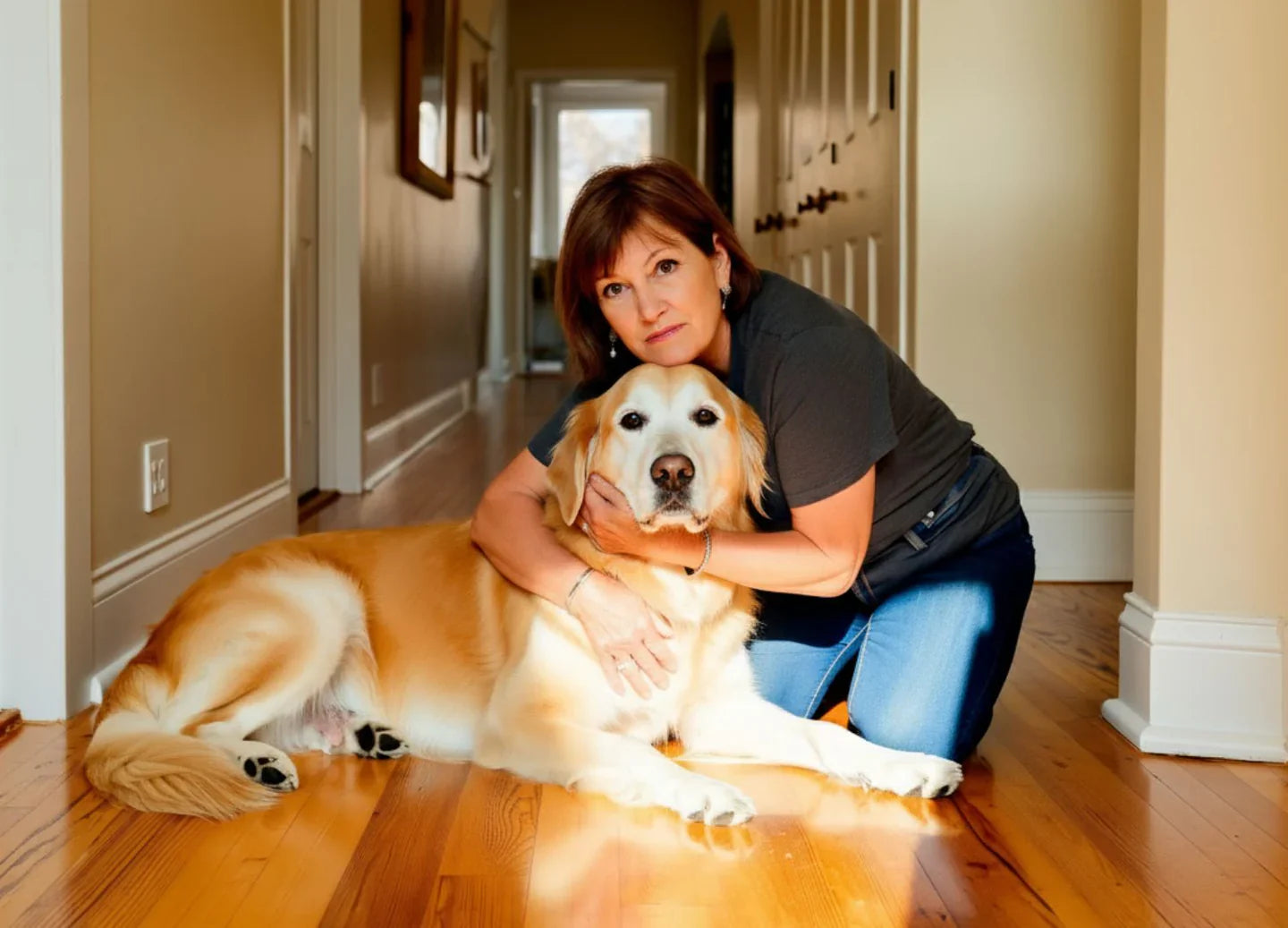
If your dog has chronic scooting, paw licking, ear infections, indoor accidents, or 3AM pacing — you've probably done what every health-conscious dog parent does.
If you've wormed your dog with Panacur or Drontal — twice, maybe three times…
If you've vacuumed the carpet obsessively, banned dog kisses, made the kids wash their hands every single time they come in from the yard…
If you've sat in the vet's office three times and been told the fecal test came back clean…
If you've watched your dog scoot across the rug the morning after — and felt that sinking feeling that something is still in your house…
You are not crazy. And you are not alone.
I've spent over 15 years as a veterinarian, with the last 8 focused specifically on integrative and holistic care.
I've worked with thousands of dogs whose owners were told the chronic symptoms were "just allergies" or "just behavioral" or "nothing the fecal panel could find."
And what I've uncovered shocked me — and then made me angry.
Roughly 80% of the standard parasite protocols prescribed by general-practice vets miss the load that's actually living in your dog's gut.
The fecal tests miss it.
The standard dewormers can't reach it.
And every single day that the load stays alive in your dog, eggs are being shed into your home.
Onto the carpet your toddler crawls on.
Onto the grass your kid plays on.
Onto the dog's fur that brushes your face.
The CDC has been publishing about this for decades. It just hasn't made it from the trade journals to your kitchen counter.
Most Families Are Fighting the Wrong Battle
At first, it looks simple.
Your dog starts scooting across the carpet.
Starts licking his paws raw no matter how much Apoquel he's on.
Starts having indoor accidents even though he's been house-trained for years.
Starts pacing the house at 3AM, restless, can't settle.
Then your kid starts having unexplained stomach pains. Or the pediatrician runs a panel and asks an offhand question: "Do you have a dog?"
So you do what every responsible parent does.
You wash hands more. You vacuum more. You worm the dog. You ban the face-licking. You move the dog bed out of the bedroom.
But here's what you're actually getting:
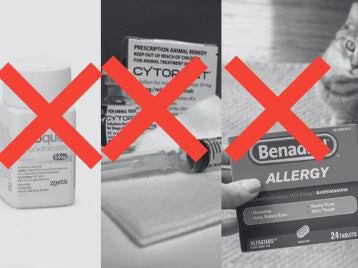
- Standard dewormers (Panacur, Drontal) → kill the adult worms visible on a fecal test, don't penetrate biofilm, don't address eggs, larvae, or the load your vet's panel never detected.
- Hand-washing protocols + vacuuming + banning dog kisses → reduce exposure incidents, don't stop the source from continuing to shed eggs into the environment.
- Quarterly fecal tests → rule out the load you can see, miss up to 75% of what's actually there.
- Apoquel + Cytopoint (when there's also itching) → suppress your dog's symptoms, don't repair the gut driving the inflammation, don't clear the load shedding into your home.
- A human parasite cleanse for yourself → may address what you have already been exposed to, does absolutely nothing to the carrier still living on your couch.
- Vet's response to your concern → "the fecal came back clean — there's nothing to treat." Standard fecal flotation misses up to 50% of whipworm infections and 75% of Giardia cases.
That's why the symptoms keep coming back.
That's why the kids keep getting sick.
That's why the pediatrician keeps asking about the dog.
Because the real problem isn't the symptoms. The real problem is the carrier — and nobody is treating the carrier the way it needs to be treated.
And that realization hit me the day Emma sat in my exam room with her four-year-old daughter Lucy.
When Conventional Wisdom Failed in My Exam Room
Bear was a 4-year-old rescue — a German Shepherd mix Emma had adopted two years earlier from a high-kill shelter in Texas.
Emma did everything "right":
✅ Premium limited-ingredient food.
✅ Daily walks.
✅ Three rounds of Panacur over 18 months — every time the scooting started up again.
✅ A basket of dog-safe wipes by the door for paw-cleaning.
✅ A strict no-bedroom rule for Bear.
✅ Hand-washing for the kids before every meal, after every dog interaction.
Still, Bear scooted across the rug a few times a week.
Still, he licked his paws raw and had recurring hot spots.
Still, he paced the house between 2 and 3AM.
Still, every fecal test came back clean.
Then one Tuesday morning, Lucy — Emma's four-year-old — started complaining of stomach pain. Her appetite dropped. She seemed tired all the time.
Her pediatrician ran a standard panel. Then she asked the question that broke Emma:
"Do you have a dog at home?"
She ordered an antibody panel for Toxocara.
Lucy's came back positive.
The pediatrician explained, gently, that this was happening more than parents realized. The CDC had documented it for years. Approximately twelve million Americans were carrying antibodies to the same parasite. The dog was almost certainly the source.
Emma sat in my exam room two days later, holding the lab printout, and asked the question that broke me:
"How is this still happening when I've done everything they told me to do?"
I had no answer.
That night I went home and made it my mission to find the real one — no matter what it exposed about my profession.
I went back through every CDC publication on Toxocara seroprevalence, every CAPC guideline on zoonotic transmission, every peer-reviewed paper I could find on biofilm-protected parasites in dogs.
And that's when everything changed.
The Shocking Hidden Cause: Compromised Gut + Subclinical Parasites + a Carrier No One Is Treating
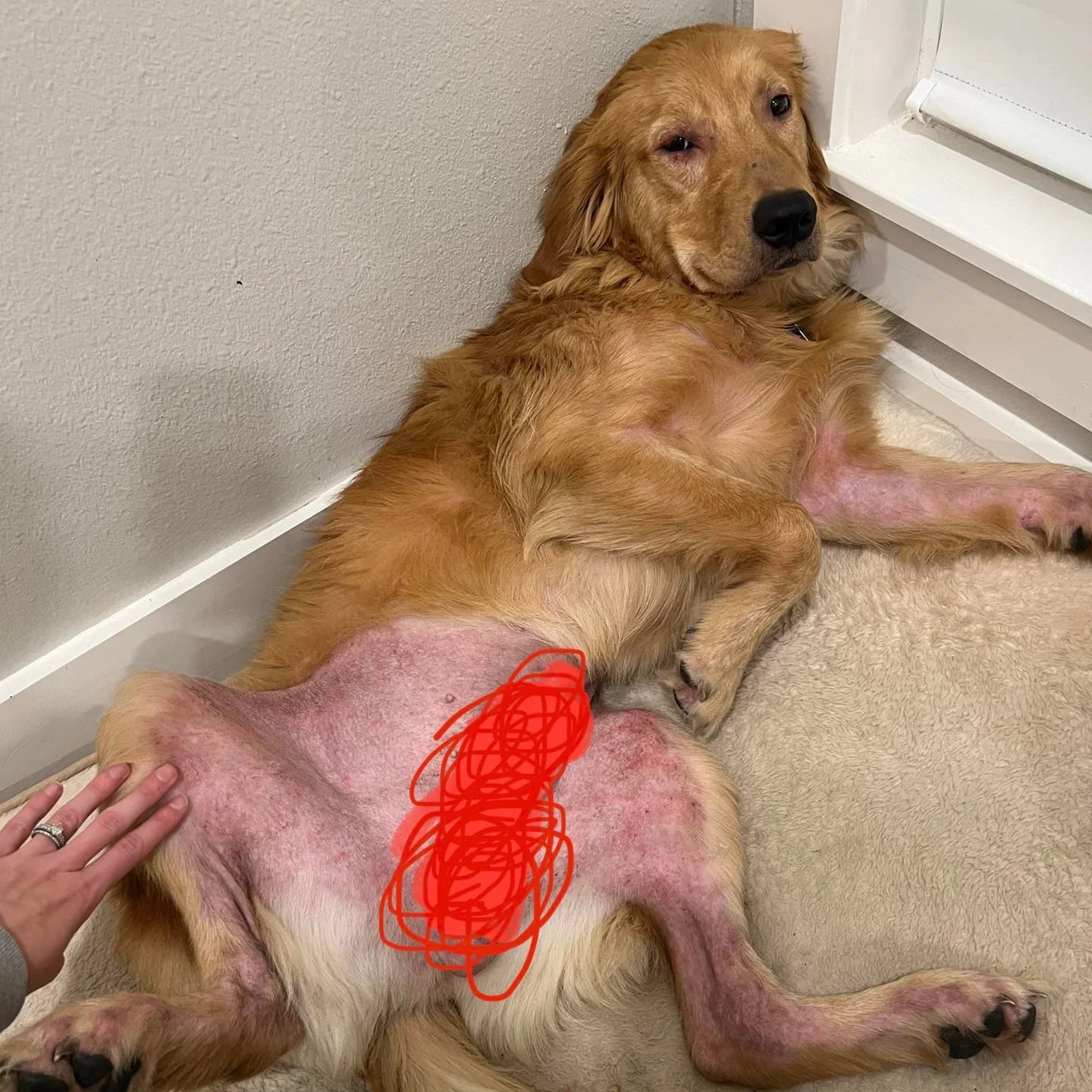
We've been thinking about this backwards.
❌ It's not "just bad luck."
❌ It's not "just one of those things kids get."
❌ It's not "the fecal was clean — there's nothing to treat."
❌ It's not "wash your hands more and you'll be fine."
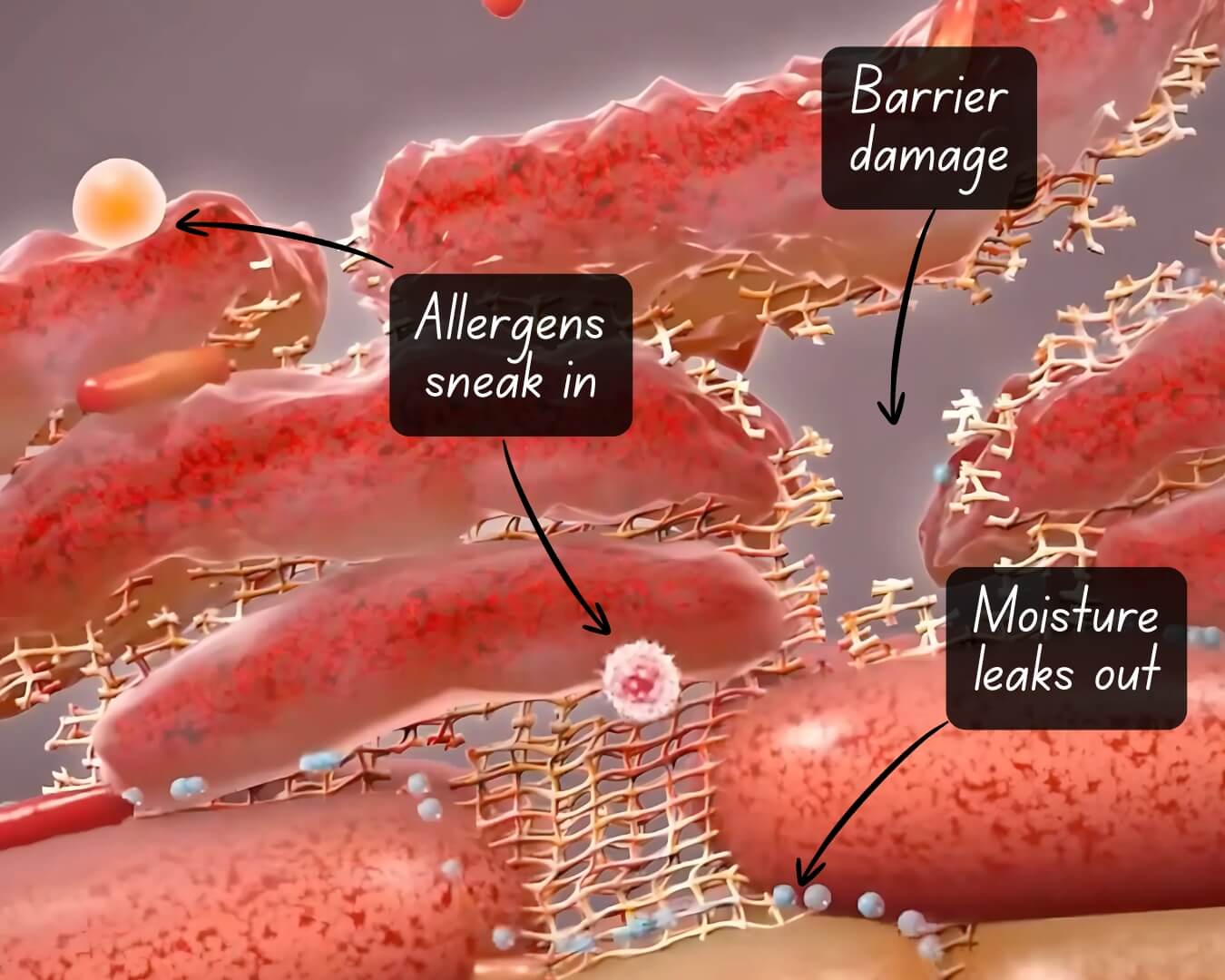
The real hidden cause is this: modern kibble, repeated antibiotics, dog-park exposure, and the simple math of being a dog in America break down your dog's intestinal lining — creating the perfect environment for parasites to take hold, hide behind biofilm, and shed eggs into your home every single day.
The gut lining — the protective wall that keeps pathogens out of your dog's bloodstream — is a single cell thick. When it breaks down, three things happen simultaneously.
First, parasites move in and hide
Roundworms (Toxocara canis), hookworms (Ancylostoma caninum), whipworms, and Giardia find a hospitable environment and establish subclinical infections — protected behind a biofilm that makes them up to 1,000 times harder to kill with conventional dewormers, and so low-grade that standard fecal tests miss them.
Here's a fact most owners never hear: 2020 research from the DOGPARCS study found that 85% of U.S. dog parks tested positive for intestinal parasites, and CAPC surveillance shows canine hookworm infections have increased 45% since 2012. Standard fecal panels miss up to 75% of these infections, because biofilm-protected parasites don't shed eggs consistently — but they do shed them constantly enough to contaminate the home environment.
Your dog doesn't need to have visible worms — or a positive fecal — to have a parasite problem. Or to be the source.
Second, the gut microbiome collapses
The beneficial bacteria that keep the system in balance get outcompeted by opportunistic organisms. The gut lining thins further. Inflammation goes systemic. Your dog gets the chronic scooting, the paw-licking, the indoor accidents, the 3AM pacing — and his body keeps producing the parasite eggs that are now landing on every surface in your house.
Third, the carrier becomes the household source
The CDC's Healthy Pets, Healthy People page lists four parasites that transmit from dogs to humans:
- Roundworm — what they call Toxocara
- Hookworm
- Tapeworm (Dipylidium)
- Echinococcus — a tapeworm that has just started showing up in human cases in North America
A nationally representative CDC survey of more than 13,000 Americans, published in PLOS Neglected Tropical Diseases, found that approximately twelve million people in the United States are infected with Toxocara — the dog roundworm. A generation ago, the CDC's own survey put that number at one in seven. The CDC ranks toxocariasis among the most prevalent neglected parasitic infections in the country.
The CDC's exact words: "Animals can sometimes appear healthy even when they are carrying germs that make people sick."
Eggs land on the carpet your toddler crawls on.
On the grass your kid plays on.
On the dog's fur. On the dog's tongue.
And when the dog licks your face, or the floor, or the kid's hand — the chain keeps moving.
You can wash your hands a thousand times. You can vacuum every day. You can ban the face-licking and put up the bedroom gate. If the carrier is still shedding, the household is still being exposed.
That's the chronic stomach pains the pediatrician keeps puzzling over.
That's the antibody panel that comes back positive.
That's the kid that gets tired all the time.
That's the dog that keeps scooting — even after three rounds of Panacur.
Standard treatments suppress each individual symptom.
But they don't repair the gut driving the load.
And they don't break the chain at the source.
That's why they work temporarily — then fail.
The breach keeps getting worse.
If you've felt like you're going crazy — washing hands, vacuuming carpets, worming the dog, watching the symptoms cycle back through — you're not crazy.
The treatments were never designed to fix this.
And here's what made me angry:
The CDC has been publishing about zoonotic transmission for decades. The Companion Animal Parasite Council publishes guidelines about it every year. 80% of dog owners already know parasites can transmit from pets to people — but only 23% are actually concerned about it happening to their family. Less than half wash their hands after touching their dog. One in three households lets the kids play in the same yard the dog defecates in. One in five owners never picks up the yard at all. And approximately one-third of dogs in this country are on no parasite-prevention protocol of any kind.
The knowledge is there. The action isn't. And the gap between them is a $1.4 billion-a-year veterinary pharmaceutical industry that profits from your dog staying medicated and your family staying unaware.
Vets treat the dog. Doctors treat the human. Nobody is treating the source.
Why Common Solutions Fail (And Always Will)
I tested every major approach against this reality.
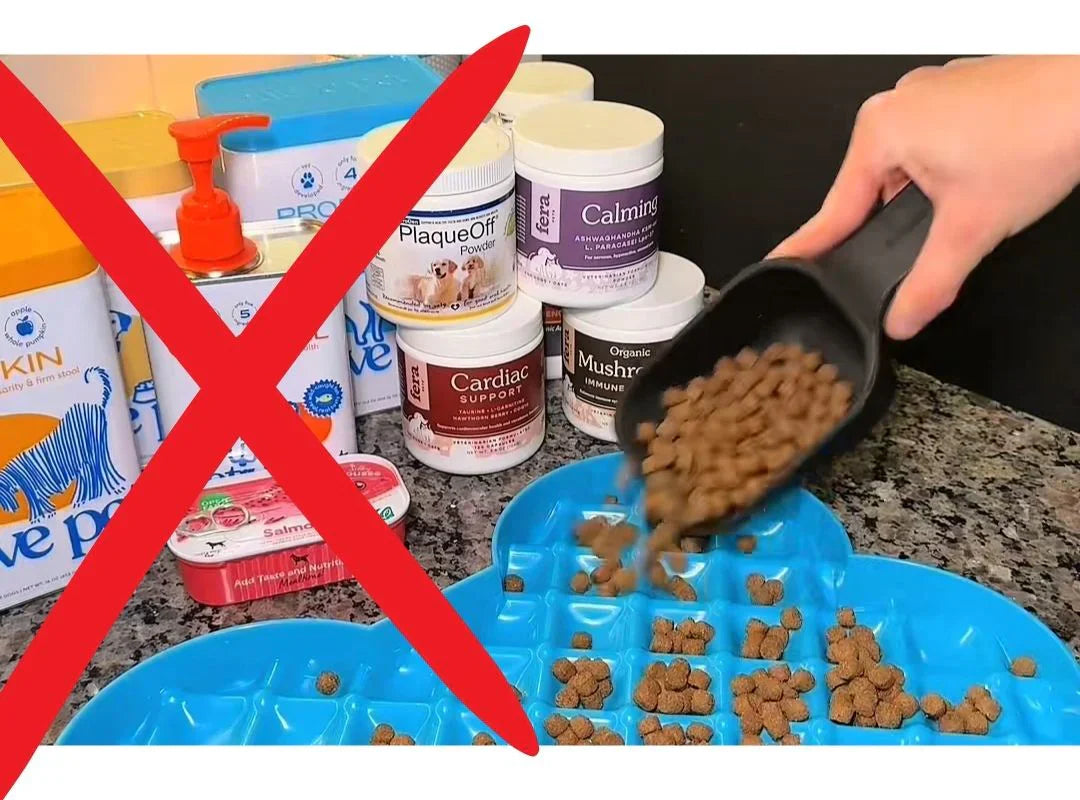
Standard dewormers (Panacur, Drontal). Kill adult worms visible on a fecal test. Don't penetrate biofilm. Don't address eggs, larvae, or the compromised gut environment that let them take hold in the first place. The cycle restarts within weeks. The household keeps being exposed. Failure.
Quarterly fecal panels. Rule out what they can see. Miss up to 75% of what's actually there. Biofilm-protected parasites don't shed eggs consistently — but they shed them often enough to keep contaminating the home. Failure.
Hand-washing + vacuuming + banning dog kisses. Reduce exposure incidents. Don't address the carrier. As long as the source keeps shedding, the chain keeps moving. Failure.
A human parasite cleanse for yourself. May address what you've already been exposed to. Does absolutely nothing to the carrier still living on your couch. Within weeks, you're being re-exposed. Failure.
Apoquel / Cytopoint (when there's also chronic itching). Suppress your dog's symptoms. Don't repair the gut. Don't clear the load. The carrier keeps shedding while your dog feels temporarily better. Failure.
Probiotics alone. Support the microbiome. Can't rebuild a gut that's still being attacked from inside the biofilm. Failure.
The vet's reassurance that "the fecal came back clean." Designed to find acute infections in puppies. Not designed to find subclinical loads in adult dogs hiding behind biofilm. The reassurance is the problem. Failure.
They all miss the real mechanism: gut compromise + biofilm-protected parasite load + a carrier shedding into the home.
Why didn't the public know this? Because structural repair isn't prescribed through vet offices.
There's no recurring revenue in fixing the root cause. The system profits from the monthly Apoquel refill, the quarterly fecal-test office visit, the next $140 prescription when the symptoms cycle back. Your dog staying a carrier is their business model.
The Professional Secret: Multi-Herb Cleanse in Liquid Form
Your dog's gut needs a complete protocol working across every parasite life stage, every gut-dysfunction factor, and the gut lining your home depends on.
PawsyLabs Parasite Cleanse Drops combine 10 herbal actives with a postbiotic blend in one dropper:
The purge stack: Pumpkin Seed, Black Walnut Hull, Wormwood Root (0.85% thujone) and Clove. The four botanicals that go after the parasites themselves.
The soothe stack: Marshmallow Root, Ginger Root and Fennel Seed. They calm and coat the gut lining while it clears.
The terrain stack: Oregon Grape Root, Olive Leaf and Goldenrod. They make the gut a place parasites cannot settle back into.
The rebuild: a Postbiotic Blend (L. plantarum, L. acidophilus, B. lactis, L. reuteri). Heat-treated and shelf-stable, so the antimicrobial herbs cannot kill it the way they kill a live probiotic. It rebuilds the gut flora during and after the cleanse. And the gut lining can finally heal, closing the door on the load that has been shedding into your home.
Missing even one of these means incomplete repair.
The cleanse without the postbiotic crashes the gut. The postbiotic without the cleanse gets overwhelmed by the parasite load. The herbs without each other miss different parasite life stages. And without breaking the chain at the source, the household keeps being exposed — no matter how many times you vacuum, no matter how many times the kids wash their hands.
Why liquid matters
Chews and powders have to be digested before their active compounds reach the intestinal lining — where the parasites actually live. Most of the active herbs get broken down by stomach acid before they ever touch the gut wall.
Liquid herbal drops go directly to work on contact. The active compounds interact with the gut lining where they're needed most, not after a 4-hour digestive detour.
Your dog's body can actually use them. And the carrier finally clears.
Because it delivers all ten botanical actives plus a postbiotic blend in the most bioavailable form, it can repair the entire gut environment — and break the household-exposure chain — from within.
This isn't new — it's just been hidden from mainstream veterinary medicine until now.
One company is making this full protocol available: PawsyLabs Parasite Cleanse Drops.
Proof It Works
When I introduced this protocol in my practice, the results stunned me.
In a case series of 200+ dogs with treatment-resistant chronic symptoms — scooting, paw licking, indoor accidents, 3AM pacing, plus the recurring presentations the families had been chasing — 184 showed meaningful improvement within the first three weeks.
Owners reported:
- Scooting stopped within the first week.
- Paw licking reduced or eliminated by week 2.
- Indoor accidents resolved without any additional training.
- Dogs finally sleeping through the night without 3AM pacing.
- Coat quality improving, with old bald patches growing back.
- Stools firming up and becoming regular.
- And — for families who'd been terrified of what was being shed in the house — the visible signs that the carrier was finally clear.
Emma started Bear on the protocol the same week Lucy's pediatrician confirmed the antibody result.
By day 5, the 3AM pacing stopped. For the first time in 18 months, Emma slept through the night.
By week 2, Bear's paws weren't raw anymore. The scooting was gone.
By week 3, the morning after a normal play day, Bear was calm, his coat was filling in, and Emma was no longer staring at the rug wondering what was on it.
Six months later, Lucy's pediatrician ran her panel again at the routine well-child visit. That's a conversation the family had with their doctor — not a claim I or PawsyLabs can make about what the cleanse does for humans. But Emma told me she finally slept the night before that appointment without dreading the call.
She told me through tears:
"I feel like I have my house back. Bear is calm. Lucy is okay. We're not living in fear of what's in the carpet anymore. I didn't know we could be like this."
And she wasn't alone.

What Normal Should Look Like
Most owners accept chronic symptoms — and the quiet anxiety about what's in the house — as "normal."
❌ The scooting that means you're vacuuming the rug again.
❌ The paw licking you've blamed on allergies for three years.
❌ The pediatrician's offhand question about the dog.
❌ The 3AM pacing that's cost you your own sleep.
❌ The fecal test that comes back clean while the symptoms keep coming.
❌ The lawn the kids aren't allowed to play on barefoot anymore.
But that's not normal. That's preventable suffering — for your dog and for the people sharing the floor with him.
With proper gut support and cleansing, dogs can:
✅ Stop the scooting, the paw licking, the indoor accidents.
✅ Sleep peacefully through the night — owner and dog both.
✅ Have a coat the kids can pet without you flinching.
✅ Walk into the kitchen without leaving a trail of contamination behind them.
✅ Be the dog you adopted — not the source you've been quietly worrying about.
The unnecessary suffering is staggering.
Millions of dogs are walking around right now with biofilm-protected parasite loads no fecal test is catching. Approximately twelve million Americans are walking around with antibodies to the parasite those dogs are shedding. The CDC has been writing about it for decades. The veterinary trade press writes about it constantly. It just hasn't reached the families who need to hear it.
You're hearing it now.
Why Act Now
Holistic veterinary circles are finally talking openly about the gut-biofilm-zoonotic-transmission picture.
But here's the thing.
PawsyLabs is running a Founder's Launch promotion right now — and they're being generous with it.
Buy 2 bottles, get 1 free. Buy 3, get 2 free. Plus free shipping and a 90-day money-back guarantee — the longest in the category.
The catch? Liquid herbal formulas are harder to produce than cheap filler chews. Their supplier has limited capacity, and this is their first production run.
And demand has been outpacing stock since they opened — especially from parents who read what the CDC has been publishing and decided they were not going to wait.
I'd grab it while the Founder's Launch is still running.
⚠️ Current Stock Status: Only ~120 bottles remaining for new customers
P.S. Since Lucy's pediatrician asked Emma that question, I've become passionate about sharing this discovery. I've told every family in my practice — not just the dog owners, the families — and the results speak for themselves.
"Our pediatrician asked if we had a dog when Mason started getting stomach pains. The antibody panel came back positive for Toxocara. We'd wormed Coco three times that year — fecals always clean. After 21 days on the protocol, Coco's scooting stopped, his coat came back, and we finally felt like we'd done something at the source. I wish someone had told me about biofilm two years ago."
— Hannah (toddler with Toxocara exposure)"Sadie had been on Apoquel for three years. The dermatologist had given up. More than that, my husband and I had stopped letting our daughter sleep with her — and it broke our hearts. Three weeks on this protocol, Sadie's paws healed, the scooting stopped, and Lily slept with her dog again for the first time in two years."
— Mike & Jennifer (chronic skin + household concern)"I'm a nurse. I've known about zoonotic transmission since school. I'd been worming my dog quarterly with what the vet recommended. Then I read the CDC's seroprevalence data and realized I'd been doing the wrong thing for years. After this protocol, the chronic scooting stopped, the recurring ear infections stopped, and I stopped lying awake worrying about what was in the rug under my baby's playmat."
— Rachel (RN, infant in the household)Your Decision
You have three choices.
Option 1. Keep wiping paws, vacuuming carpets, and worming the dog with what the vet recommends. Keep watching the symptoms cycle back. Keep wondering what your kid's next pediatrician visit is going to surface — and hope the next antibody panel comes back negative.
Option 2. Try a stronger dewormer. Try a different vet. Try a human parasite cleanse for yourself while the carrier on your couch keeps shedding.
Option 3. Try the holistic approach that rebuilds the gut, penetrates biofilm, clears the carrier, and breaks the household exposure chain at the source.
The choice seems clear to me. But it's yours to make.
Join Thousands of Families Who've Broken the Chain at the Source
If you're ready to address the root cause — the carrier — here's what to do.
- Click the button below to see if stock is still available.
- Choose your package (the full journey is 90 days, and most owners choose multi-bottle packages to have a second cleanse for 6 months later).
- Start the simple daily ritual. One by-weight dropper a day, straight onto the food. Half a dropper under 10 lbs, one dropper for 10 to 35 lbs, two for 35 to 75 lbs, three over 75 lbs. No pills, no wrapping anything in cheese.
- Watch for first signs of improvement (days 3–7).
- Notice the chronic symptoms resolving (weeks 1–2).
- Complete the full 90-day journey (day 30, day 60, day 90) — and know the source is finally clear.
Remember: you're protected by the 90-day guarantee. You have nothing to lose except the symptoms you've been managing for years — and the quiet worry about what's been in your house.
Click the link above to see if PawsyLabs is still offering their limited sale
Dr. Rachel Harmon, DVM Holistic Veterinarian